why Certain Movie Soundtracks Feel so Emotional — Exploring how Music
We’ve all been there: you’re scrolling through the SceneIt feed, watching a silent clip of a spaceship docking or a lone figure walking across a desert, and it feels impressive but hollow. Then, you
SceneIt Team · 4 min read · AI & Tech
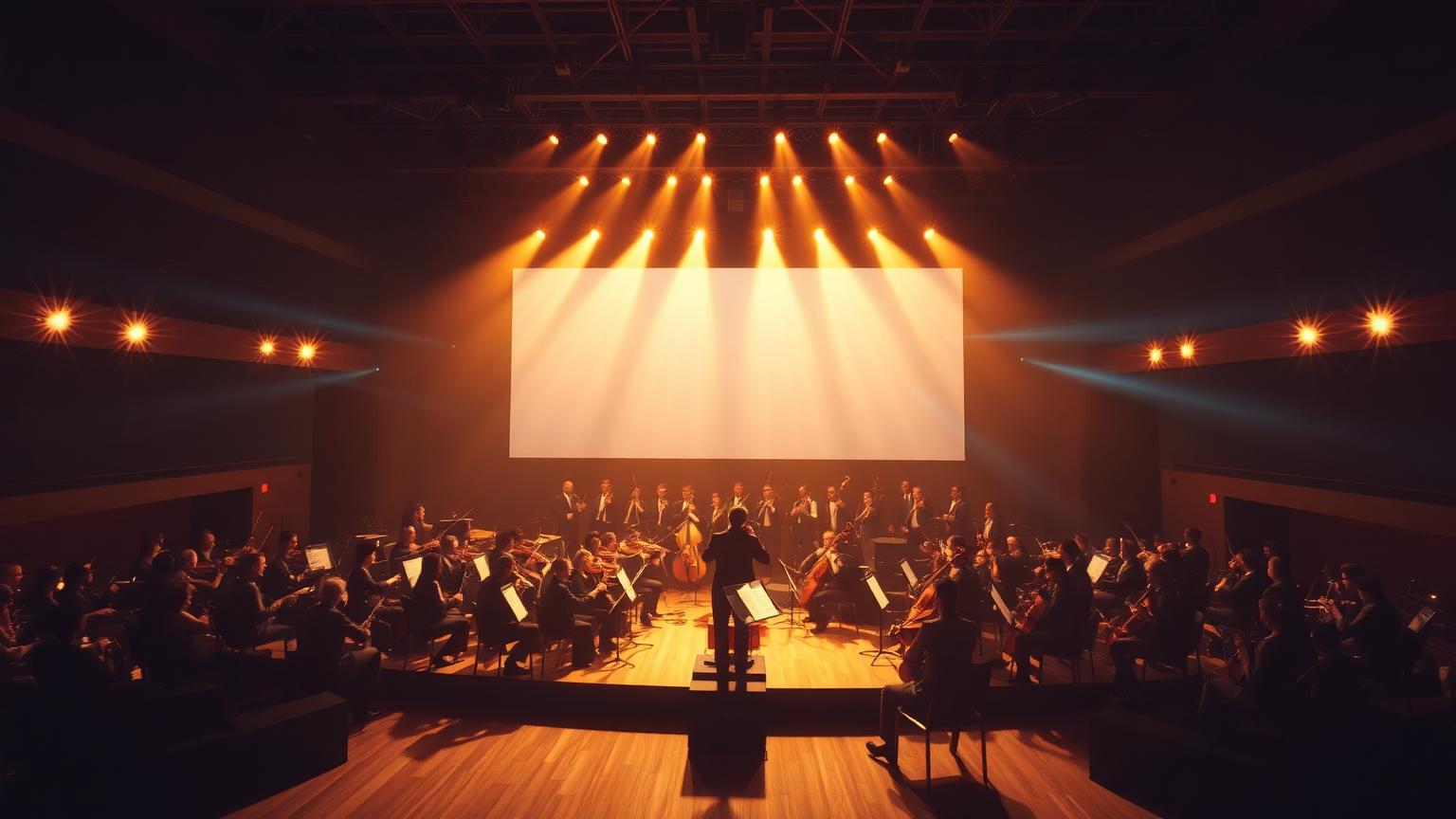
We’ve all been there: you’re scrolling through the SceneIt feed, watching a silent clip of a spaceship docking or a lone figure walking across a desert, and it feels impressive but hollow. Then, you toggle the sound on. Suddenly, the hair on your arms stands up. The difference isn't just decibels; it’s a physiological shift. Music in film isn't an accompaniment; it is the emotional architecture of the story, serving as a direct line to the limbic system that bypasses the logical brain entirely.
The Science of the "Sonic Anchor"
The reason certain soundtracks feel so deeply emotional is rooted in how our brains process auditory stimuli compared to visual ones. Visuals require interpretation—we have to recognize a face, understand an expression, and contextualize a setting. Music, however, is visceral. When Hans Zimmer uses a "Shepard tone"—an auditory illusion that creates the feeling of a constant rise in pitch—in the score for Dunkirk, he isn't just "making tense music." He is triggering a literal fight-or-flight response in the audience.
This is what we call the "Sonic Anchor." In a medium that is constantly cutting between different angles, locations, and time periods, the music provides the emotional consistency. It tells us how to feel when the visuals are ambiguous. Think of the "Cornfield Chase" in Interstellar. Without Zimmer’s organ-heavy, rhythmic pulsing, it’s just a truck driving through corn. With it, the scene becomes a desperate, spiritual race against time. The organ—an instrument traditionally associated with the divine and the infinite—elevates a farm scene into a cosmic tragedy.
Hans Zimmer and the Death of the Melody
For decades, film scoring was dominated by the "Leitmotif" system perfected by John Williams. You have a theme for the hero, a theme for the villain, and they clash. But modern cinema, led by the work of Hans Zimmer, has moved toward "texture" over "melody."
In Blade Runner 2049, Zimmer and Benjamin Wallfisch didn't give us catchy tunes to hum. Instead, they gave us massive, distorted synth swells that feel like the world itself is moaning. This shift is why modern soundtracks feel more "immersive" than "theatrical." When you search for "atmospheric sci-fi" on SceneIt, the AI isn't just looking for spaceships; it’s looking for those low-frequency vibrations that simulate a sense of dread or awe. Zimmer’s brilliance lies in his realization that a single, sustained note played on a cello can carry more grief than a complex orchestral arrangement.
The Power of Silence and Subtraction
To understand why music is emotional, we must also look at when it stops. The most impactful soundtracks are those that know when to recede. In No Country for Old Men, the Coen Brothers famously used almost no score. This creates a vacuum of tension that the audience fills with their own anxiety.
However, when a composer like Nicholas Britell uses music in Moonlight, he uses "chopped and screwed" techniques—slowing down classical string arrangements to mimic the feeling of a memory being stretched or distorted. It feels emotional because it mimics the way human grief actually works: it’s repetitive, it’s heavy, and it lingers. When you’re using the SceneIt AI Film Studio to conceptualize a scene, the prompt "melancholy strings" is a start, but "distorted, slow-tempo cello" is what captures the actual weight of a character’s internal struggle.
The "Inception" Effect: Music as a Narrative Tool
Soundtracks also feel emotional because they often function as a hidden narrator. In Inception, Zimmer’s famous "Non, je ne regrette rien" manipulation is the ultimate example. By slowing down the Edith Piaf song to a glacial pace, he musically represents the dilation of time within the dream layers.
The audience feels a sense of mounting doom because the music is literally "slowing down" their perception of the film’s reality. This isn't just background noise; it’s a structural element of the plot. When a soundtrack is synced so perfectly with the narrative stakes, the emotional payoff isn't just a byproduct—it’s the engine. This is why certain films stay with us for years; we aren't remembering the dialogue, we’re remembering the way the bass felt in our chests during the climax.
Decoding Emotion in the SceneIt AI Film Studio
As we move into an era where AI helps us discover and even create filmic experiences, understanding these musical pillars is essential. On SceneIt, when users look for "movies that feel like a warm hug" or "movies that feel like a panic attack," the algorithm is often decoding the frequency and instrumentation of the score.
A "warm hug" usually involves mid-range frequencies, acoustic instruments, and a steady, 4/4 tempo (think Thomas Newman’s work in The Shawshank Redemption). A "panic attack" involves high-frequency dissonant strings or low-frequency industrial drones (think Hildur Guðnadóttir’s Joker).
The emotion of a film is rarely found in the script alone. It’s found in the friction between what we see and what we hear. Hans Zimmer once said that his job is to "ask the questions the director hasn't thought of yet." The next time you’re lost in a scene, pay attention to the soundscape. You’ll realize that the music isn't just telling you how to feel—it’s making sure you have no other choice.