When Fiction Becomes Fact: Movies That Saw Tomorrow
Often dismissed as mere entertainment, some films possess an uncanny foresight, accurately predicting technological leaps, societal shifts, and political landscapes years, even decades, before they materialized. We delve into cinematic crystal balls that truly got it right.
SceneIt Team · 4 min read · Recommendations
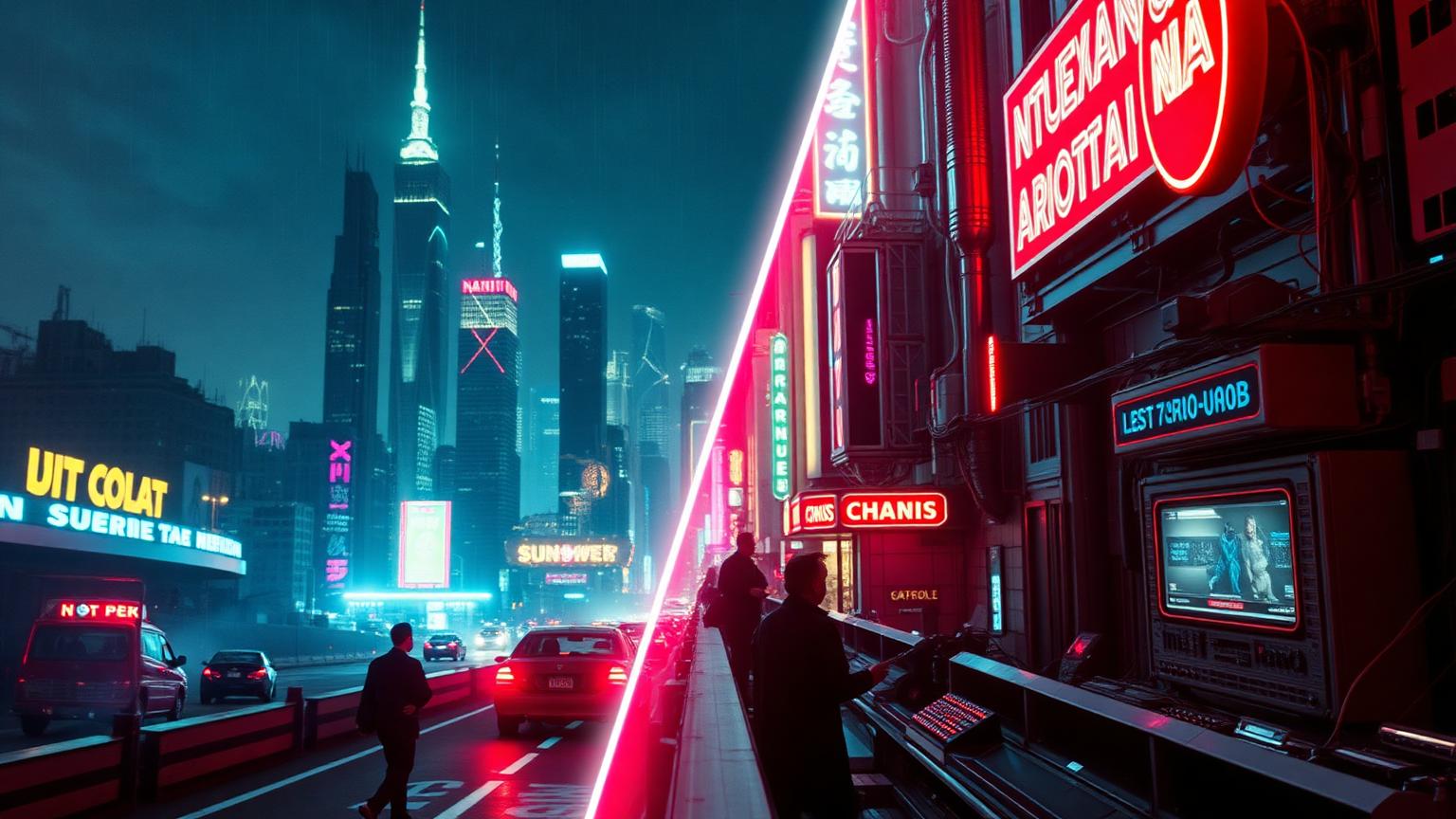
Movies are more than just moving pictures; they are cultural artifacts, reflections of our present anxieties, and often, unwitting or intentional glimpses into our future. While many sci-fi flicks present fanciful impossibilities, a select few have proven to be remarkably prescient. It's almost unsettling how accurately some filmmakers and writers have envisioned the world we now inhabit, long before the first prototype or political upheaval.
The Age of Surveillance and Data
Perhaps no area has seen more chillingly accurate predictions than the realm of surveillance and data. George Orwell's Nineteen Eighty-Four, a novel, naturally, but its 1984 film adaptation, though commercially unsuccessful, brought the pervasive 'telescreen' to life. While not a literal two-way television, the concept of constant monitoring and data collection is eerily similar to our current reality with smart devices, social media, and CCTV. Every click, every search, every purchase is logged and analyzed. The film's 'Thought Police' might be less overt, but the sentiment of a watchful, data-hungry entity is undeniably present.
Another stand-out is the 1998 thriller Enemy of the State. Starring Will Smith and Gene Hackman, the film depicts a powerful NSA operative using advanced satellite surveillance, phone tapping, and facial recognition to track and discredit a lawyer who unknowingly possesses evidence of a political murder. At the time, this level of ubiquitous, real-time tracking seemed like pure Hollywood exaggeration. Fast forward to the revelations by Edward Snowden and subsequent reports on government mass surveillance programs, and Enemy of the State moves from thrilling fiction to unnerving documentary.
Technological Leaps That Came True
Science fiction has always been fertile ground for technological speculation, but some films hit the nail squarely on the head. Stanley Kubrick's masterpiece 2001: A Space Odyssey (1968) is a goldmine of premonitions. Forget the existential AI HAL 9000 for a moment; consider the tablet computers used by the astronauts. The 'newspad' device used by Dr. Floyd on his trip to the moon clearly depicts a flat, portable screen displaying news and video calls, predating the iPad by over 40 years! The concept of video calls themselves, common to many sci-fi stories, became a mainstream reality with Skype and FaceTime.
Even more specific, and often overlooked, is the 1987 film RoboCop. Beyond the cyborg police officer, the movie features sophisticated urban surveillance systems, advanced prosthetic limbs, and even automated vehicles – all concepts that are either commonplace or in advanced stages of development today. The idea of privatized police forces and corporatized public services, while not fully realized, certainly echoes current debates about the role of private enterprise in public infrastructure.
Societal Shifts and Cultural Reflections
Beyond gadgets, some films have astutely charted the course of societal evolution. Idiocracy (2006), initially a box office flop, has gained cult status precisely because its satirical premise feels increasingly less like satire and more like prophecy. The film portrays a future where humanity has become uniformly unintelligent due to dysgenesis and a culture obsessed with frivolous entertainment and consumerism. While an exaggerated caricature, many viewers today feel a chilling resonance with its depiction of declining attention spans, reality TV saturation, and brand-driven lives.
And then there's the nuanced, often understated, future presented in Her (2013). This film explores a world where artificial intelligence is so advanced it can form deep emotional bonds with humans. Samantha, the AI operating system, is sentient, witty, and evolves intellectually. While we haven't reached the level of 'conscious' AI companions, the film beautifully captures our increasing reliance on AI for personal assistance, emotional support, and even friendship. With advanced chatbots and AI voice assistants becoming more sophisticated and integrated into our daily lives, Her feels less like a distant future and more like an imminent possibility, highlighting the complex ethical and emotional landscapes we're beginning to navigate.
The Power of Foresight – And a Warning
These films aren't just fascinating because they got things right; they serve as a testament to the power of imaginative storytelling to anticipate the future. Often, these predictions emerge from extrapolating current trends, anxieties, and scientific advancements to their logical, or sometimes illogical, conclusions. They can act as both aspirations and warnings. Minority Report (2002), for instance, with its 'pre-crime' division and personalized advertising, explores the ethical quagmire of predictive policing and pervasive data collection – a debate that continues to shape our legal and privacy landscape.
SceneIt celebrates these cinematic crystal balls because they remind us that film is not just an escape, but a powerful medium for critical thought and prophetic insight. The next time you're watching a sci-fi thriller, take a moment to consider: are you witnessing mere fantasy, or a sneak preview of tomorrow?